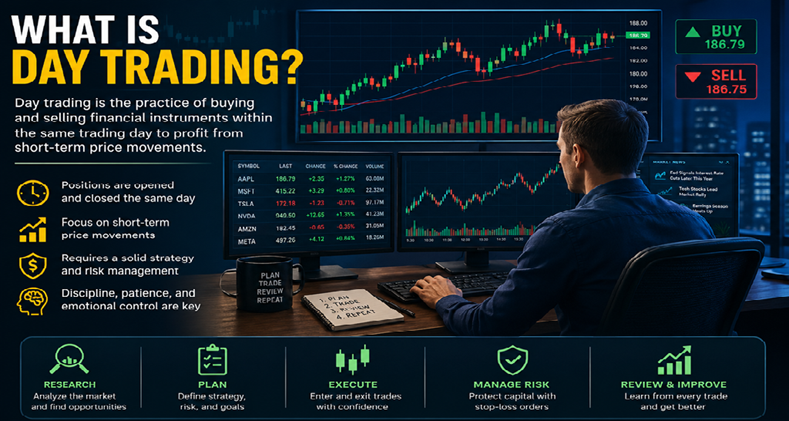
What Is Day Trading
Day trading has become one of the most popular methods of participating in financial markets. With the rise of online brokerage platforms, mobile trading apps, and easy access to market information, millions of people are exploring short-term trade opportunities every day. But many beginners still ask the same question: what is day trading?
Day trading is a style of trade in which traders buy and sell financial assets within the same trade day. These assets can include stock market terminology, cryptocurrencies, forex currencies, options, exchange-traded funds (ETFs), commodities, and other securities. Unlike long-term investors who hold assets for months or years, day traders aim to profit from small price movements over short periods.
This guide explains everything you need to know about day trade, including how it works, common strategies, benefits, risks, tools, and tips for beginners.
What Is Day Trading?
Day trading is the process of buying and selling financial instruments within a single trade session. Positions are typically opened and closed on the same day, meaning traders do not hold investments overnight.
The goal of day trade is simple: profit from short-term price fluctuations. Traders use charts, technical indicators, market news, and trade strategies to identify opportunities.
For example, a trader may buy shares of a company at $50 in the morning and sell them at $51 later in the day. Although the price difference appears small, traders often execute multiple trades and use larger position sizes to generate returns.
Day trading is common in:
- Stock markets
- Forex markets
- Cryptocurrency markets
- Options markets
- Futures markets
Because prices move constantly, day traders need quick decision-making skills and disciplined risk management.
How Does Day Trading Work?
Understanding what is day trading requires learning how the process works.
A day trader follows several steps:
1. Market Research
Traders analyze:
- Financial news
- Economic reports
- Earnings announcements
- Technical charts
- Market sentiment
2. Finding Opportunities
Traders look for:
- Price breakouts
- Trend reversals
- Momentum movements
- High trade volume
3. Opening Trades
The trader buys or sells an asset based on market expectations.
4. Risk Management
Successful traders always use:
- Stop-loss orders
- Position sizing
- Profit targets
5. Closing Positions
All trades are closed before the market ends.
Example of a Day Trade
| Step | Action |
|---|---|
| Buy Price | $100 |
| Shares Purchased | 100 |
| Investment | $10,000 |
| Sell Price | $102 |
| Gross Profit | $200 |
If fees and commissions are low, the trader keeps most of the profit.
However, losses can happen just as quickly if prices move in the opposite direction.
Markets Used for Day Trading
Day traders can participate in different financial markets.
| Market | Characteristics |
|---|---|
| Stocks | Popular for beginners |
| Forex | Open 24 hours |
| Cryptocurrency | Highly volatile |
| Futures | Leverage available |
| Options | Advanced strategies |
Each market has different risks and opportunities.
Stock Day Trading
Stock day trade involves buying and selling company shares during market hours.
Popular stocks for day trade usually have:
- High liquidity
- Strong price movement
- High trade volume
Examples include large technology companies, popular ETFs, and actively traded stocks.
Forex Day Trading
Forex trading involves exchanging one currency for another.
Examples:
- EUR/USD
- GBP/USD
- USD/JPY
Forex traders benefit from:
- 24-hour markets
- High liquidity
- Leverage opportunities
However, leverage can increase losses.
Cryptocurrency Day Trading
Crypto markets operate continuously, making them attractive to traders.
Popular cryptocurrencies include:
- Bitcoin
- Ethereum
- Solana
- XRP
Crypto prices can change rapidly, creating opportunities and risks.
Popular Day Trading Strategies
Successful traders use proven methods rather than guessing market direction.
1. Scalping
Scalping focuses on making many small profits.
Characteristics:
- Very short trades
- High frequency
- Small gains per trade
2. Momentum Trading
Momentum traders follow strong price movements.
Example:
A stock rises after positive news. The trader enters early and exits after the price increases.
3. Breakout Trading
A breakout occurs when prices move above resistance levels.
Traders enter positions when:
- Volume increases
- Prices break key levels
4. Reversal Trading
This strategy identifies points where trends may change direction.
It requires:
- Technical analysis
- Experience
- Patience
Common Technical Indicators
Day traders often use indicators to analyze price movements.
| Indicator | Purpose |
|---|---|
| Moving Average | Identify trends |
| RSI | Measure momentum |
| MACD | Signal trend changes |
| Bollinger Bands | Measure volatility |
| Volume | Confirm moves |
Indicators should support a strategy rather than replace analysis.
Tools Used by Day Traders
Modern traders rely on several tools.
| Tool | Use |
|---|---|
| Trading Platform | Execute trades |
| Charting Software | Analyze prices |
| News Feed | Follow market events |
| Economic Calendar | Track reports |
| Stock Screener | Find opportunities |
Popular platforms include broker software and advanced charting tools.
Advantages of Day Trading
Many people are attracted to day trade because of its potential benefits.
Potential for Quick Profits
Price movements can create opportunities within minutes or hours.
No Overnight Risk
Positions are closed before markets end.
Flexible Schedule
Some traders work part-time.
Access to Global Markets
Traders can participate in many asset classes.
Disadvantages of Day Trading
Day trade also comes with challenges.
High Risk
Losses can occur quickly.
Emotional Pressure
Fear and greed affect decisions.
Requires Time
Learning takes effort.
Capital Requirements
Some markets require significant funds.
Risks of Day Trading
Understanding risks is essential when learning what is day trading.
Market Volatility
Prices can move unexpectedly.
Leverage Risk
Borrowed money increases losses.
Psychological Stress
Emotional decisions often lead to mistakes.
Lack of Experience
Beginners may trade without a strategy.
Risk Management Tips
Professional traders prioritize protecting capital.
Use Stop-Loss Orders
Limit losses automatically.
Risk Small Amounts
Many traders risk only 1%–2% per trade.
Avoid Overtrade
Too many trades increase mistakes.
Follow a Trading Plan
Consistency is important.
Day Trading vs Investing
| Feature | Day Trading | Investing |
|---|---|---|
| Holding Period | Minutes to hours | Months to years |
| Goal | Short-term profits | Long-term growth |
| Analysis | Technical | Fundamental |
| Risk | Higher | Moderate |
| Time Required | High | Lower |
Investing focuses on long-term wealth creation, while day trade aims for short-term gains.
How Much Money Do You Need to Start Day Trading?
The amount depends on the market.
| Market | Suggested Starting Capital |
|---|---|
| Stocks | $2,000–$25,000 |
| Forex | $500–$5,000 |
| Crypto | $100–$1,000 |
| Futures | $1,000–$10,000 |
Beginners should start with money they can afford to lose.
Can Beginners Learn Day Trading?
Yes, beginners can learn day trade, but success requires:
- Education
- Practice
- Discipline
- Risk management
Many traders use demo accounts before risking real money.
Common Mistakes Beginners Make
Trading Without a Plan
Random decisions often lead to losses.
Ignoring Risk
Large losses can damage accounts.
Emotional Trading
Fear and greed are dangerous.
Overleveraging
Too much leverage increases risk.
Chasing Trades
Patience is essential.
Is Day Trading Profitable?
Day trade can be profitable, but it is not easy.
Successful traders typically:
- Follow strict rules
- Manage risk carefully
- Continue learning
- Maintain discipline
Many beginners lose money because they underestimate the complexity of trade.
Day trade should be approached as a skill and a business rather than a quick way to make money.
Future of Day Trading
Technology continues to change trade.
Trends include:
- AI-powered analysis
- Mobile trade apps
- Faster market access
- Better educational resources
As technology evolves, day trade may become more accessible, but risks will remain.
(FAQ)
What is day trading in simple words?
Day trading means buying and selling financial assets within the same day to profit from short-term price movements.
Is day trading suitable for beginners?
Yes, but beginners should learn strategies, practice, and use risk management.
Can day trading make money?
Yes, some traders earn profits, but losses are common.
How much money do I need?
The amount depends on the market and trade style.
Is day trading risky?
Yes. Price fluctuations and leverage can lead to losses.
What is the best market for beginners?
Many beginners start with stocks or forex due to educational resources and liquidity.
Do I need technical analysis?
Most day traders rely heavily on technical analysis.
Conclusion
If you have been asking what is day trading, the answer is straightforward: it is a short-term trade method where traders buy and sell assets within the same day to profit from market movements.
Day trade offers opportunities, flexibility, and excitement, but it also involves significant risks. Success requires education, patience, strategy, and strong risk management.
For beginners, the best approach is to start slowly, practice with demo accounts, develop a trade plan, and never risk money that cannot be afforded to lose. With proper knowledge and discipline, day trade can become an important skill in understanding financial markets.
About The Author