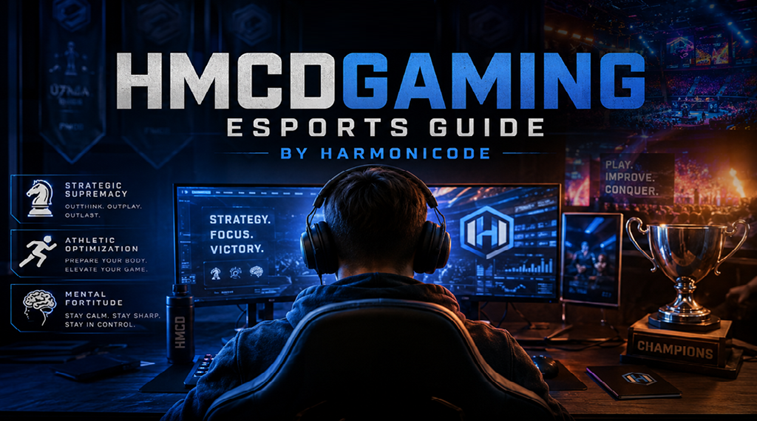
HMCDGaming Esports Guide by Harmonicode
The HMCDGaming Esports Guide by Harmonicode is a useful concept for gamers who want to explore the competitive side of modern gaming. Esports has grown from a small gaming community into a major digital entertainment industry. Players now compete in organized tournaments, represent teams, build online audiences, and develop professional gaming careers.
For beginners, however, the esports world can feel complicated. There are different game genres, competitive formats, rankings, teams, tournaments, and strategies to understand. A well-structured guide can make that journey much easier.
The HMCDGaming esports concept brings together gaming knowledge, competitive play, etruesports culture, and practical information. It can serve both new players and experienced gaming enthusiasts who want to understand competitive gaming more deeply.
What Is HMCDGaming Esports?
Harmonicode Gaming Esports can be understood as a gaming-focused esports concept connected with the Harmonicode brand. The focus is on competitive gaming and the wider ecosystem surrounding esports.
Esports involves organized video game competitions. Players may compete individually or as members of a professional or amateur team. Matches can take place online or at physical events.
Competitive gaming also involves much more than simply playing a game. Players need communication, strategy, teamwork, game knowledge, discipline, and the ability to perform under pressure.
For readers exploring HMCDGaming, these areas provide a foundation for understanding how esports works.
Why Esports Is Becoming More Popular
Esports has become increasingly accessible because gaming platforms and online communities allow players from different locations to compete.
Streaming has also changed the way audiences follow competitive gaming. Fans can watch live matches, follow their favorite teams, study professional players, and participate in gaming communities.
Social media adds another layer to the esports experience. Players and teams can communicate directly with their audiences while sharing highlights, strategies, and tournament updates.
This combination of competition, entertainment, technology, and community has helped esports develop a strong global audience.
HMCDGaming Esports Guide for Beginners
If you are new to competitive gaming, the first step is choosing a game you genuinely enjoy. Esports includes several genres, and each requires different skills.
Some competitive games emphasize quick reactions. Others depend heavily on strategy, teamwork, resource management, or tactical decision-making.
After choosing a game, spend time learning its basic mechanics. Understanding maps, characters, weapons, objectives, abilities, and game rules can make a significant difference.
You should also watch experienced players. Professional matches can demonstrate positioning, communication, timing, and decision-making that may not be obvious during casual play.
Key Elements of Competitive Gaming
The following elements are important for anyone following the HMCDGaming esports journey:
| Element | Importance in Esports |
|---|---|
| Game Knowledge | Helps players understand mechanics and strategies |
| Teamwork | Essential for team-based competitions |
| Communication | Improves coordination during matches |
| Reaction Time | Useful in fast-paced competitive games |
| Strategy | Helps players make better decisions |
| Practice | Builds consistency and skill |
| Mental Focus | Helps maintain performance under pressure |
| Adaptability | Allows players to respond to opponents |
Strong esports players usually develop several of these skills together rather than relying on one ability.
How to Improve Your Esports Skills
Improvement starts with consistent practice. However, simply playing for long hours does not always produce better results.
Instead, focus on purposeful practice. Identify weaknesses and work on them individually.
For example, if your aim is inconsistent, spend time practicing accuracy. If you struggle with decision-making, review previous matches and identify where your choices could have been better.
Recording gameplay can also be valuable. Watching your own matches allows you to notice mistakes that may be difficult to recognize while playing.
Another useful approach is studying high-level competitors. Pay attention to how they move, position themselves, communicate, and react to unexpected situations.
The Importance of Esports Strategy
Strategy is one of the biggest differences between casual gaming and competitive esports.
A skilled player may have excellent mechanical ability but still struggle against an organized opponent. Competitive matches often reward players who understand the bigger picture.
Teams may develop strategies before a match and adjust them based on their opponent’s behavior.
Good strategy can include map control, resource management, positioning, timing, team coordination, and objective management.
Learning when to attack and when to play defensively can be just as important as mechanical skill.
Teams and Communication
Team-based esports depends heavily on communication. A team with talented individuals can still perform poorly if its members do not cooperate.
Effective communication should be clear and relevant. Players need to share important information without creating unnecessary distractions.
Teams also benefit from clearly defined roles. Depending on the game, players may specialize in offense, defense, support, strategy, or other responsibilities.
Good communication builds trust. Over time, teammates can learn each other’s habits and develop better coordination.
Tournaments and Competitive Events
Tournaments are an important part of the esports ecosystem. They provide players with opportunities to compete against stronger opponents and demonstrate their abilities.
Competitive events can range from small community tournaments to large international competitions.
Tournament formats can differ. Some use knockout brackets, while others include group stages followed by playoffs.
Understanding the format is useful for both players and viewers. It helps fans understand what teams need to accomplish to advance.
Technology and the Future of Esports
Technology continues to influence competitive gaming. Faster internet connections, powerful gaming hardware, streaming platforms, analytics tools, and artificial intelligence are changing the gaming experience.
Performance analytics can help players identify patterns in their gameplay. Teams can use data to study opponents and develop better strategies.
Artificial intelligence may also influence game development, training systems, moderation, and esports analysis.
For a technology-oriented gaming brand such as Harmonicode, these developments provide interesting areas for future esports content.
Tips for Aspiring Esports Players
If you want to take competitive gaming seriously, establish realistic goals.
Start by improving your fundamentals rather than immediately focusing on professional competition. Build consistent habits and track your progress.
It is also important to maintain a healthy balance. Regular breaks, sufficient sleep, and responsible gaming habits can support long-term performance.
Avoid comparing your progress constantly with professional players. They have usually spent years developing their skills.
Instead, measure your improvement against your previous performance.
HMCDGaming Esports Guide: Quick Overview
| Topic | Key Information |
|---|---|
| Focus | Competitive gaming and esports |
| Brand | Harmonicode |
| Audience | Gamers, esports fans, and beginners |
| Main Skills | Strategy, teamwork, communication, and mechanics |
| Practice | Consistent and purposeful training |
| Competition | Online and organized esports events |
| Technology | Gaming hardware, streaming, analytics, and AI |
| Career Potential | Players, coaches, creators, analysts, and more |
Frequently Asked Questions
What is the HMCDGaming Esports Guide by Harmonicode?
The HMCDGaming Esports Guide by Harmonicode is a gaming-focused guide concept designed to help readers understand competitive gaming, esports strategies, tournaments, teams, and player development.
Is HMCDGaming suitable for beginners?
Yes. Beginners can use esports guides to learn competitive gaming fundamentals, terminology, strategies, and ways to improve their gameplay.
What skills are important in esports?
Important skills include game knowledge, communication, teamwork, strategic thinking, reaction time, adaptability, and consistent practice.
How can I become better at competitive gaming?
Practice regularly, study your mistakes, watch experienced players, learn game mechanics, and focus on specific weaknesses instead of simply playing more hours.
Is teamwork important in esports?
Yes. Teamwork can be critical in team-based games. Communication, coordination, role awareness, and trust can significantly influence match results.
Can esports become a career?
Yes. Esports can offer different career paths. These can include professional players, coaches, analysts, streamers, content creators, tournament staff, and other gaming-related roles.
Why is strategy important in esports?
Strategy helps players make better decisions during competitive situations. Strong strategy can compensate for weaknesses and help teams respond effectively to opponents.
Conclusion
The HMCDGaming Esports Guide by Harmonicode provides a useful framework for understanding competitive gaming and the growing esports environment. Esports is no longer limited to playing video games for entertainment. It combines skill, strategy, teamwork, technology, competition, and community.
Whether you are a beginner learning the basics or an experienced gamer looking to improve, understanding these elements can make competitive gaming more rewarding.
The best approach is to practice consistently, study the game, learn from mistakes, communicate effectively, and remain adaptable. As esports continues to evolve, guides such as HMCDGaming can help gaming audiences better understand the competitive world and the opportunities it creates.
About The Author